






“I could do that.”
That’s me mumbling as I wander through galleries in the Modern Museum of Art in New York City.
Each visit to MoMA has taught me the same lesson. I don’t know much about art history. And I might be an art snob.
“I could do that,” I think, looking at a canvass that is totally white or “Two Cheeseburgers With Everything” made from burlap soaked in plaster and painted with enamel.
Yes, such comments make me an art snob. Before you get too angry with me, though, please know I do love art – all kinds of art. I am amazed at much of the art history we applaud and memorialize.
I tend to like artistic creations that I recognize. Stuff that looks amazingly real in detail and color and shape. (More of the snob, I guess.)
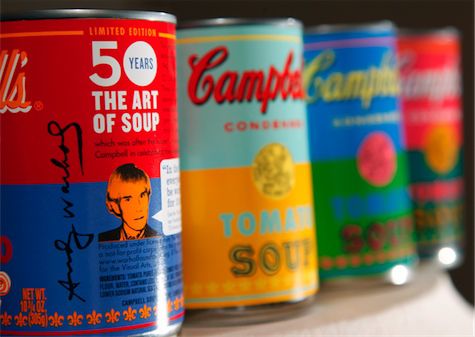
But even that personal standard was tested as I stood before the famous Campbell’s soup can creation by Andy Warhol. The detail in color and shape of the cans is excellent. But … I’m staring at cans of soup. Many varieties of soup, yes, but I more enjoyed looking for typos in the can labels. There were none. I moved on.
I was a bit dazed staring at a huge tangle of metal mounted on the wall. It was colorful and a bit colossal. I wondered how hard it must have been to hang it on the wall.
The small placard nearby explained: “Automobile parts and other metal.” It was called “Essex.”
Interesting to look at? Yes. Intriguing? Yes. Aroused my curiosity? Yes.
Does that make it art? Apparently, I thought, walking away, also thinking I could hang junk metal on a wall.
Then, I stood before a stoney, dirty grey circle with a wrinkled and dented surface by artist Judit Reigl. A bit of history was posted nearby:
“The textured, moonlike surface of this painting reflects its previous life as a floor covering in her studio. The canvas was initially part of an entirely different series of paintings but was rejected by the artist and consequently used as a drop cloth, absorbing splatters of paint and getting creased and stained from movement. Reigl later rediscovered and renamed it Guano-Round … .”
So … I began to wonder less about what I was seeing and more about the hows and the whys. Why does an artist make two cheeseburgers? And how do you persuade a museum to display used auto parts? Is it more about who the artist is versus the art itself?
OK. OK. I know I’ve stepped over a sensitive line here. But these are honest thoughts I had trying to understand what I saw and how it got there.
I know there’s a decent story behind those questions for every art selection. But I won’t pursue it. I didn’t even listen to the audio tour linked to the displays. (Go ahead, say it. I am a snob.)
But … I do like the idea of not putting boundaries on creativity. Art is expression. Limitless. Take it or leave it. MoMA celebrates all that.
And, yes, I look and mumble, “I could do that.” But … I didn’t.
And that speaks to me, asking: What’s inside of me that needs expressing? And how do I let it out?
And anything that prompts that question is art. Powerful art.
• Lonny Cain, retired managing editor of The Times in Ottawa, also was a reporter for The Herald-News in Joliet in the 1970s. His PaperWork email is lonnyjcain@gmail.com. Or mail The Times, 110 W. Jefferson St., Ottawa, IL 61350.
